Consultant-Led, Non-Surgical Treatment in Alderley Edge, Cheshire
Dupuytren's contracture, sometimes called Viking disease, causes the tissue beneath the palm to thicken and tighten, gradually drawing one or more fingers in towards the hand. Low-dose radiotherapy is a non-surgical treatment that targets the active nodules and cords driving the condition. It is used in the earlier stages, before a fixed bend has developed, with the aim of slowing progression.
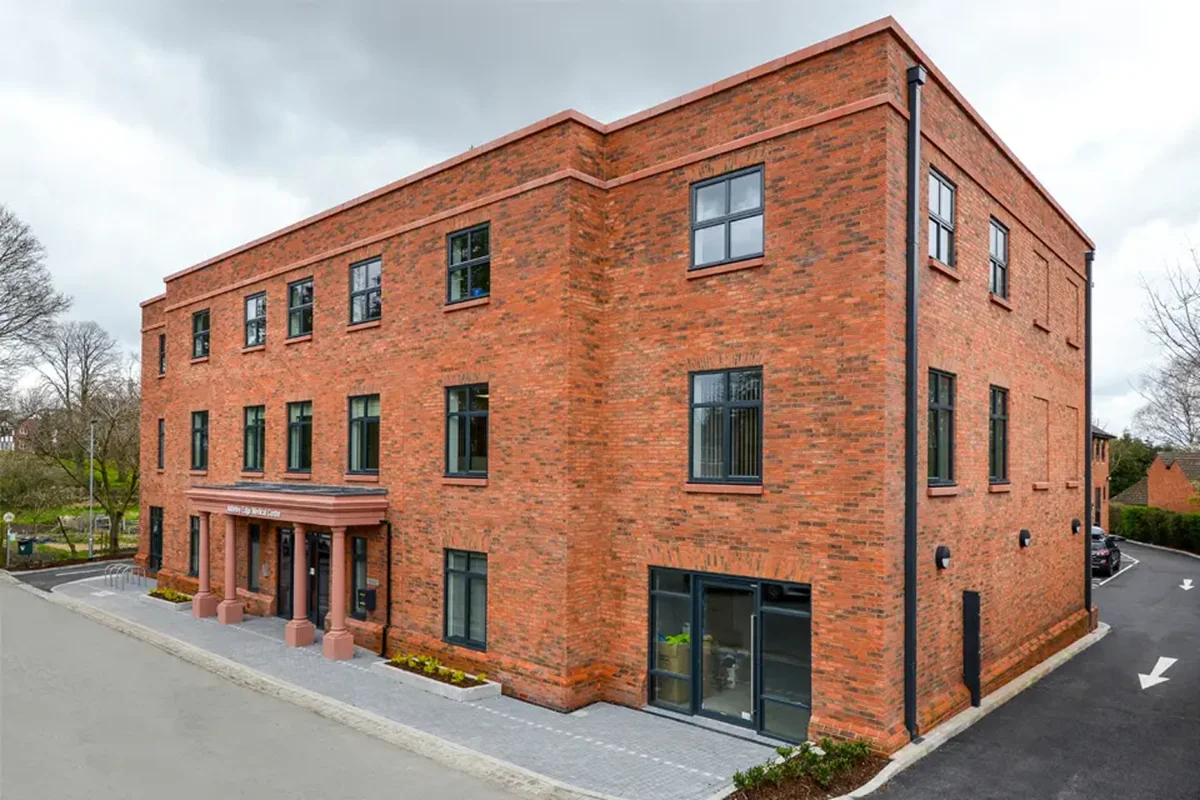
Theralife Clinics specialises in low-dose radiotherapy for benign conditions like Dupuytren's. Treatment is delivered by consultant clinical oncologists at Alderley Edge Medical Centre on Talbot Road, around 25 minutes by train from Manchester Piccadilly. No referral required.
Understanding the Condition
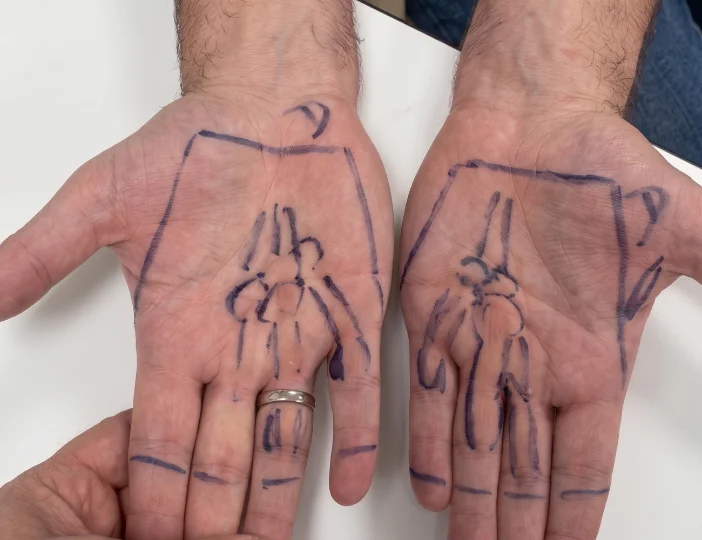
Dupuytren's contracture affects the fascia - the sheet of connective tissue beneath the skin of the palm. Small lumps called nodules usually form first. Over time, these can develop into cords that tighten and draw one or more fingers towards the palm, most often the ring or little finger. It is not usually painful, but it can gradually limit hand movement and make everyday tasks harder, such as gripping, writing, or laying your hand flat on a table.
Dupuytren's tends to progress in phases. Low-dose radiotherapy is used during the active phase, while nodules and cords are still forming and before a finger has developed a fixed bend. Once a contracture is established, radiotherapy is not expected to reverse it, and surgical options are usually discussed instead.
If your hand has changed noticeably over months rather than years, it is worth arranging an assessment. A consultation with one of our Dupuytren's specialists can confirm which stage you are at and whether radiotherapy is appropriate for you.
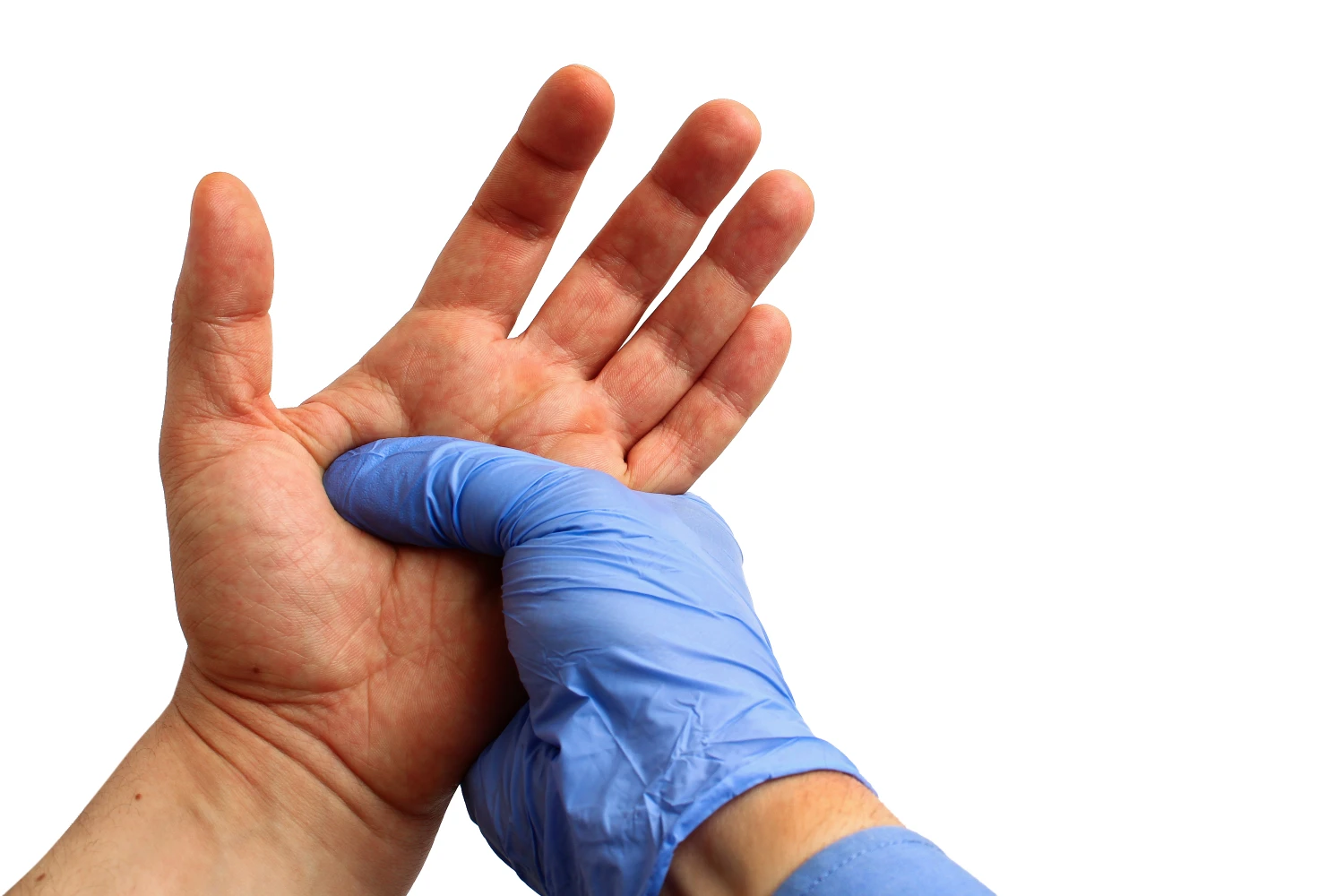
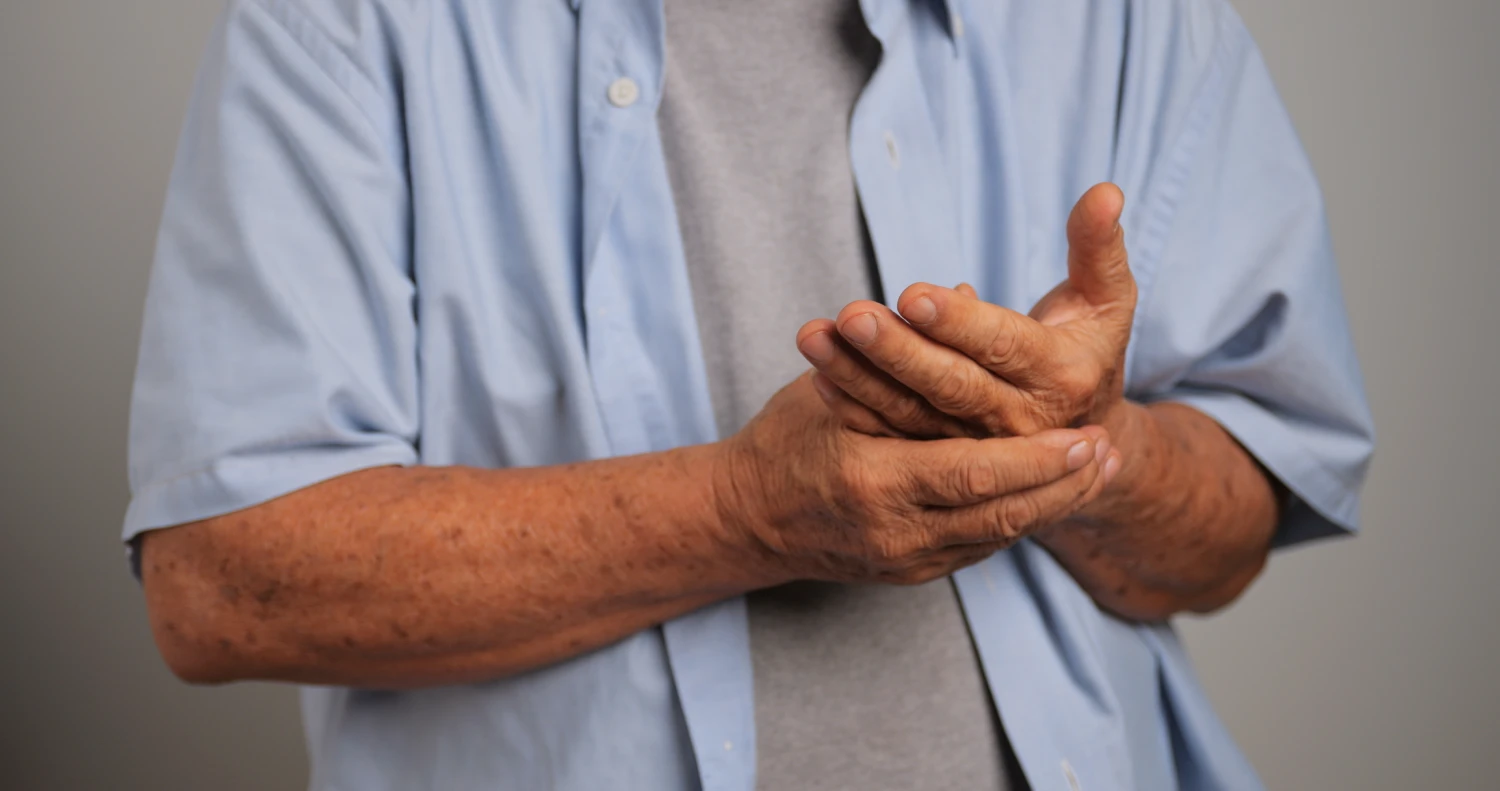
A firm lump, or nodule, forms beneath the skin of the palm, most often near the base of the ring or little finger. Most people find it by accident - washing their hands, applying hand cream, or gripping something.
The palm feels tighter than it used to when you open your hand fully or press it against something. This is often the first thing people feel rather than see, and it can appear before any lump is obvious.
A firm, rope-like thickening develops under the skin, running from the palm towards a finger. Cords are frequently present long before a finger starts to bend, so a straight finger does not mean nothing is happening.
The gap between your fingers narrows as the tissue between them tightens, turning a wide U shape into a narrower V. You may notice it when spreading your hand out flat or reaching across a keyboard.
As the cords shorten, one or more fingers are gradually drawn in towards the palm and become harder to straighten fully. This is the stage known as a contracture, and it is the point at which treatment options change.
Around one in five people with Dupuytren's in the hands develop similar firm lumps in the arch of the foot. This is called Ledderhose disease, and it can become tender when standing or walking.
Why Low-Dose Radiotherapy
Low-dose radiotherapy acts on the overactive cells that lay down the abnormal tissue, slowing the process that drives nodules and cords. The aim is to hold the hand as it is now. It is not expected to reverse a bend that has already formed.
Left untreated, around a third of people go on to need surgery for a contracture. Published evidence indicates radiotherapy reduces that risk by roughly three times. Outcomes vary, and no treatment can guarantee an individual result.
Treatment is delivered from outside the body, so there are no incisions, no needles, no anaesthetic and no splinting afterwards. The treatment itself is painless and most people feel nothing at all while treatment is delivered.
Each session takes around ten minutes per hand, in an appointment of roughly twenty minutes. You can drive yourself, go straight back to work, and carry on as normal the same day.
What to Expect
You will be seen by one of our consultant clinical oncologists - Dr Richard Shaffer, Dr Ian Lampkin or Dr James Wylie. All of our consultants are clinical oncologists who specialise in radiotherapy, with particular expertise in treating benign conditions such as Dupuytren's.
Your consultant will ask when you first noticed the changes, whether anyone in your family has had similar hand changes, and what you use your hands for day to day. They will then examine both hands, and usually your feet, measuring the extension of each finger, the span between them and the movement in your thumbs. Photographs are taken so that any change can be measured accurately at your next visit. Either way, you will leave knowing what stage you are at and what the right next step is for you.
You will then discuss what the findings mean. Not everyone needs treatment straight away - for some people the right decision is to monitor the condition and reassess, and your consultant will explain how to keep track of it at home. Appointments take place at Alderley Edge Medical Centre on Talbot Road, with free on-site parking and a short walk from Alderley Edge station.
Your Treatment Plan
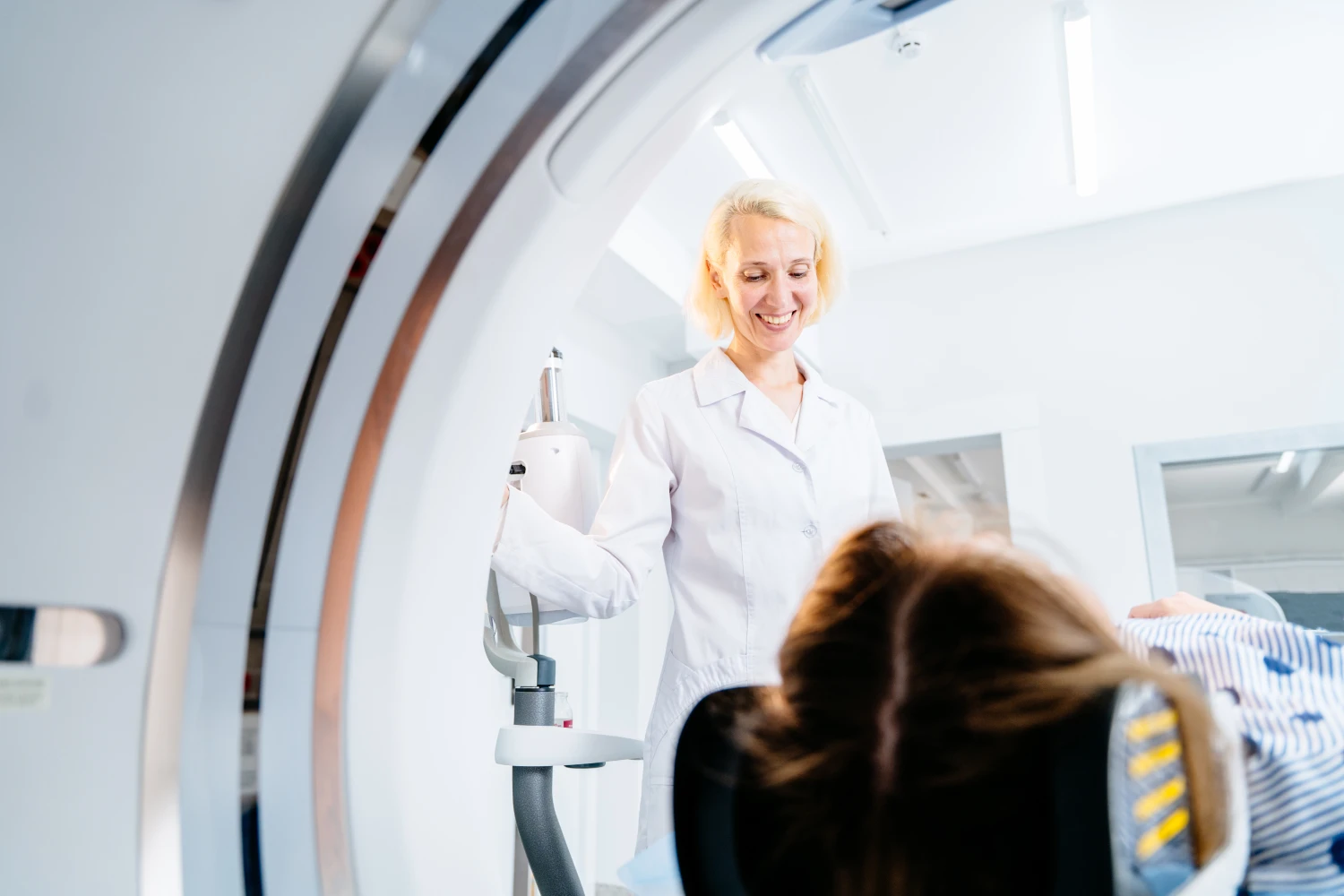
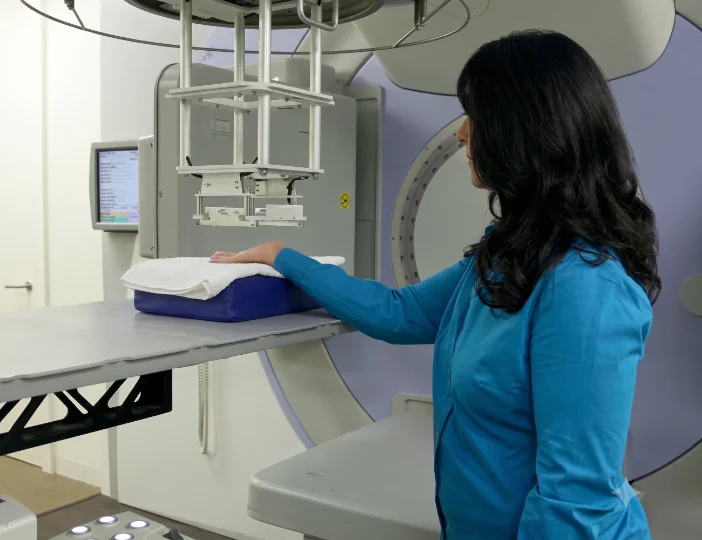
Radiotherapy for Dupuytren’s is given in two short blocks rather than all at once, with a gap in between to give the tissue time to respond. Each session takes around ten minutes per hand, in an appointment of about twenty minutes. Your hand rests flat while the machine moves around you. You will not feel anything - there is no heat, no stinging and no drowsiness, and you can drive yourself to and from every appointment and go straight back to work.
First Block
Over one week, Monday to Friday.
Break
Nothing to do. We are flexible on timing and can work around your commitments.
Second Block
Over one week, completing the course of ten.
After Your Treatment
Two to three weeks after each treatment week, the skin on your palm may become red, sore or dry, similar to mild sunburn. This affects only the small area treated. A simple, unperfumed moisturiser is usually all that is needed, and for most people it settles within a couple of weeks. While the skin is sore it is more easily damaged, so take extra care with manual work during that time.
Around one in five people have lasting dryness in the treated area, because radiotherapy reduces the activity of the sweat glands there. This is managed with moisturiser. There is also a theoretical risk that radiation can cause a type of skin cancer in the treated area.
Radiotherapy is slow to take effect. Some people notice a difference within a few months, but it can take up to a year for the full benefit. A small number find things feel worse for a few weeks before they improve.
Is Radiotherapy Right for You?
The most important question is not what your hand looks like today, but whether it has been changing. Radiotherapy works best while the condition is active and before a fixed bend develops. Radiotherapy becomes less effective the further a bend has progressed, which is why timing matters more than severity. If your fingers are still straight but no longer bend back as far as they once did, that is often the point to be assessed rather than a reason to wait. Our consultants will measure each finger, compare it against any previous measurements, and tell you honestly which of these three situations applies to you.
Not changing
Nodules that have stayed much the same over the past year, with your fingers still bending back normally. No treatment needed yet, but worth reviewing so that any change is picked up early.
If It Is Changing
The condition has progressed over the past year, or your fingers no longer bend back as far as they used to. This is the stage at which radiotherapy is most likely to help, and treatment can still be appropriate once a slight bend has started.
If a Bend Is Established
The finger no longer straightens and the hand does not work as you need it to. Radiotherapy cannot release a contracture that has already formed. Surgery or needle treatment can, and your consultant will refer you to a hand surgeon.
Care That Stands Apart
Theralife Clinics is a consultant-led clinic specialising in low-dose radiotherapy for benign conditions. The same consultant looks after you from your first assessment through to follow-up. We see patients from across Manchester, Cheshire and the wider North West.

Common Questions
