Consultant-Led Care in Cheshire and Manchester
Bursitis is a condition where a small fluid-filled sac (bursa) in your joint becomes inflamed and painful. While it can develop in various joints, it most commonly happens in the hip.
Low-dose radiotherapy is a non-invasive treatment that may help reduce the pain and inflammation caused by bursitis. It delivers small doses of radiation to the affected area to calm the inflammation.
At Theralife Clinics, we offer low-dose radiotherapy for bursitis at our Alderley Edge Medical Centre. If rest, changing your activities, and other early treatments aren’t working for you, speak to one of our consultants to find out if it’s suitable for you.

Bursitis Explained
A bursa is a small, fluid-filled sac near your joint, between your bones, tendons and muscles. It cushions your joint to reduce friction as you move. Repeated pressure, overuse, injury, and other factors can cause your bursa to become inflamed. You may notice aching, stiffness, swelling, or redness in the area, and increased pain when you move the joint in certain ways.
Hip bursitis (trochanteric bursitis or greater trochanteric pain syndrome) is the most common type. It can also affect your shoulder, elbow, or knee.
For many patients, bursitis symptoms settle over weeks by resting the area and avoiding specific movements that trigger the pain. For others, they can last for months despite these initial treatments, making everyday movements increasingly uncomfortable. If you’re concerned about joint pain, talk to one of our consultant clinical oncologists about a professional assessment.
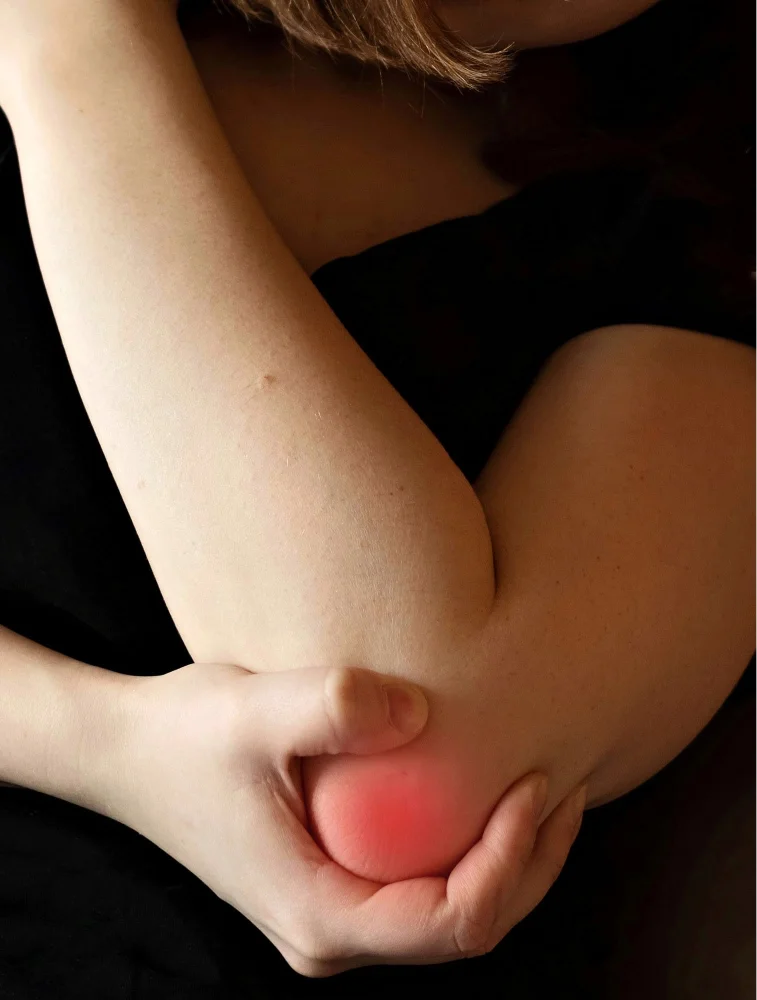
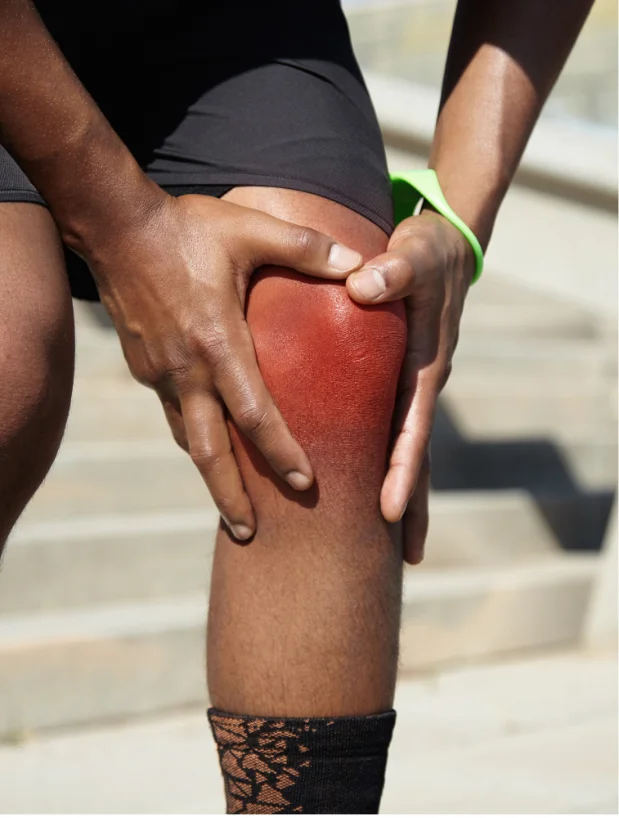
You feel pain directly over the inflamed area, for instance on the outer edge of your hip. It usually becomes worse when you press on it or move in ways that compress the joint.
Many people with hip bursitis experience more pain at night, especially when they lie on the affected side. This can make it difficult to sleep.
Your symptoms may become worse when you walk, climb stairs, or do activities that repeatedly load your joint. This pain often increases gradually throughout the activity rather than starting suddenly.
You may experience mild swelling in the area over the affected bursa. This can be more noticeable in joints close to the skin surface, like the elbow or knee.
Your joint may feel stiff after you sit or lie down for a while. It might ease slightly as you start to move, then return with continued activity.
Depending on which joint is affected, bursitis can make day-to-day activities harder. You may find it harder to walk, sit for long periods, sleep comfortably, or take part in activities involving repeated movement.
Why Patients Consider Low-Dose Radiotherapy
Radiotherapy treats bursitis entirely from outside your body. No incisions, needles, or anaesthetic, and no recovery time afterwards.
The dose used is a small fraction of the dose used for cancer treatment, aimed specifically at the affected bursa.
Published studies report that 46% to 72% of patients with hip bursitis had partial or complete pain relief after low-dose radiotherapy. In a more recent study, over 70% of patients reported significant pain relief after a two-course treatment plan.
Radiotherapy sessions usually last a few minutes and won’t affect your daily life or work. Most people can drive themselves home or on to their next daily activity.
Your First Appointment
You will see one of our consultant clinical oncologists, Dr Richard Shaffer, Dr Ian Lampkin or Dr James Wylie. They will ask you about your bursitis pain, including how it affects your day-to-day life, how long you’ve had it, and any treatments you may have already tried. They will examine the inflamed area to see where the tenderness is located.
Your specialist will give you clear, personalised advice on whether radiotherapy is likely to help. They will describe what the course involves, and what it may and may not do for you. You will leave with a clearer understanding of your options, whether you choose radiotherapy, another bursitis treatment, or more tests. If you choose low-dose radiotherapy with our clinic, we’ll give you a consent form to sign before your first session. Nothing is decided on the day unless you want it to be.

Your Treatment Plan
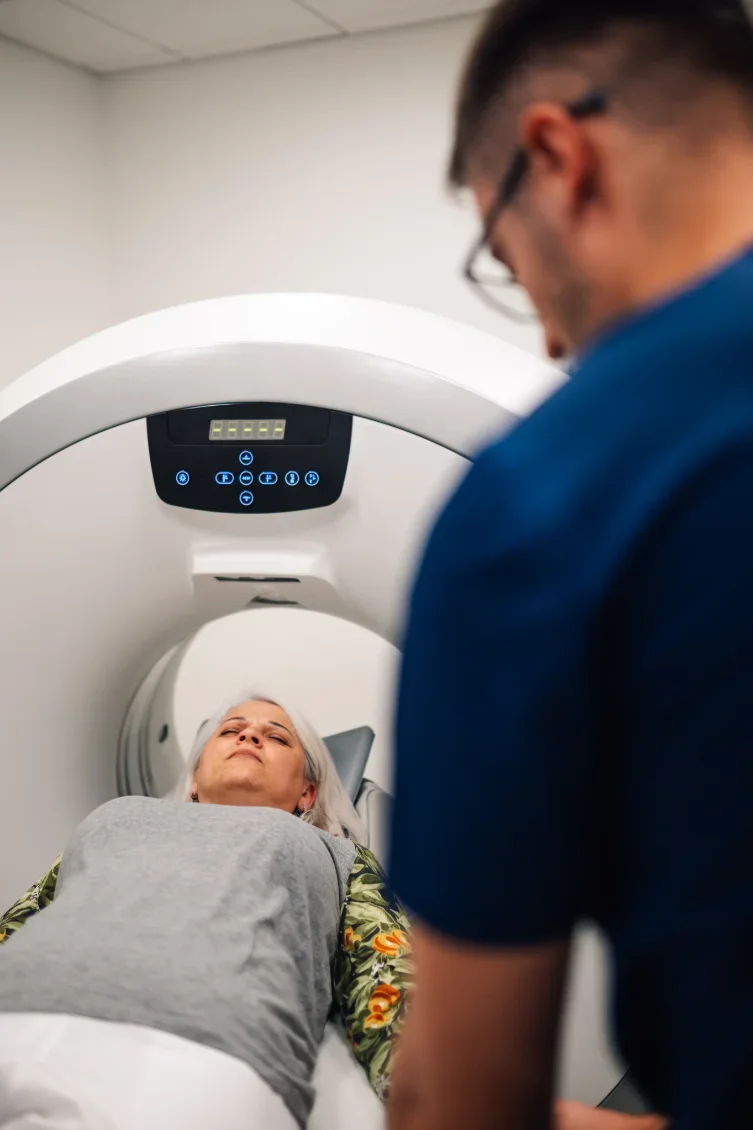
Most bursitis treatments at our clinic involve six sessions of low-dose radiotherapy over two to three weeks. Each appointment takes around ten minutes in total, and the radiotherapy itself usually takes under a minute. Most people don’t notice any drowsiness, discomfort, or dizziness, and drive themselves home after their session.
First Block
Over two to three weeks.
Review
After your first course, you pick a convenient time to meet your consultant and talk through how you have responded.
Second Block, If Needed
Many people choose a second course of six sessions to further improve their symptoms. If your symptoms have already resolved after the first course, you can choose to stop there.
After Your Treatment
Most people have no side effects from low-dose radiotherapy for bursitis. A small number notice mild dryness or redness of the skin over the treated area, which usually settles on its own. If you notice any changes, tell your care team at your next appointment.
For some people, radiotherapy causes longer-term skin changes like mild dryness. Like any treatment involving radiation, low-dose radiotherapy involves a very small theoretical risk of developing skin cancer in the treated area many years later. This is estimated at around 0.1% over a lifetime, or about 1 in 1,000. The risk is lower for older patients and higher for younger patients, and your specialist will discuss what it means for you.
Successful low-dose radiotherapy treatments cause gradual, rather than immediate, pain relief from bursitis. In one study of people with hip bursitis and similar painful conditions, about 4 in 10 people reported their pain was much better on the day treatment ended. This number rose to nearly 6 in 10 when they were asked again months later.
From Symptoms to Treatment
Specialists may recommend low-dose radiotherapy if your bursitis symptoms have not responded well enough to initial treatments.

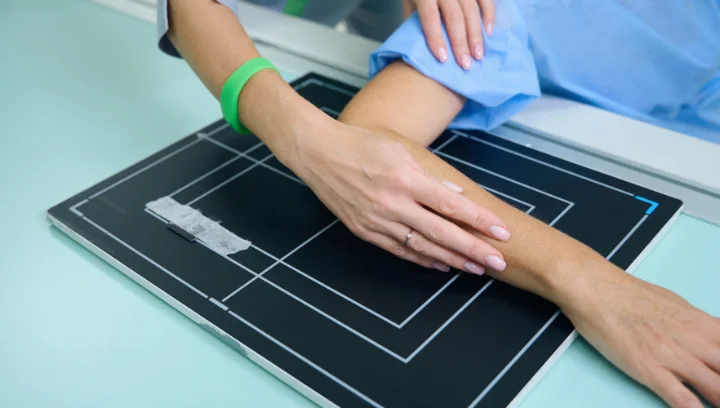
Your doctor has confirmed you have bursitis through an assessment. This sometimes involves a scan.
Your hip, elbow, knee, or other inflamed bursa feels no less painful despite resting, changing your activities, physiotherapy and sometimes even after a steroid injection.

Your pain is affecting your day-to-day activities and sleep, or keeping you from activities you enjoy.
Care That Stands Apart
Theralife Clinics is led by consultant doctors who specialise in low-dose radiotherapy for benign conditions like bursitis. You will be supervised by one dedicated specialist throughout your initial consultation, your treatment sessions, and for every follow-up. We treat patients from Alderley Edge, Wilmslow, Handforth, Prestbury, Macclesfield, Bramhall, Knutsford, Poynton, Cheadle Hulme, Altrincham, Stockport and Manchester city centre, and from further afield across the North West.

Common Questions
