Consultant-Led Care in Cheshire and Manchester
Most tendon pain improves with rest and physiotherapy, but some doesn’t settle completely. If your pain has persisted for months despite other treatments then you could consider very low-dose radiotherapy. It uses a very small and gentle dose, targeted precisely at the affected tendon.
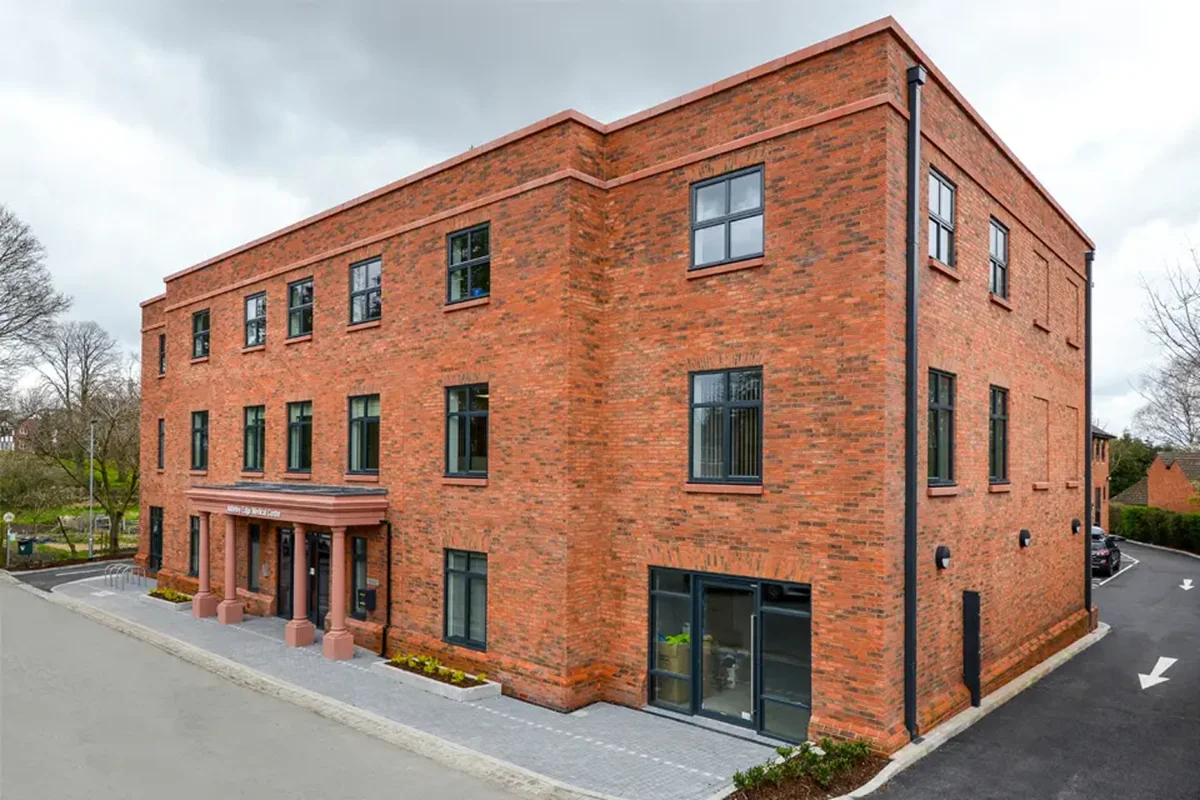
Theralife Clinics specialises in low-dose radiotherapy for benign conditions like tendonitis, delivered by consultant clinical oncologists at Alderley Edge Medical Centre.

Tendonitis Explained
Tendons are the strong cords that join muscles to bones. Tendonitis is what we call it when the tendon becomes painful, tender and stiff, usually after repetitive strain, a change in activity or sometimes just ordinary wear and tear. The pain tends to be felt directly over the tendon and it worsens with use. You may also see tendonitis written as “tendinitis”, or hear a clinician call it “tendinopathy” or “tendinosis”, which are just different names for the same thing.
It can affect almost any tendon in the body. We often see it in the elbow (tennis or golfer's elbow), the shoulder (rotator cuff tendonitis), and the heel (Achilles tendonitis and plantar fasciitis). We also treat tendon pain in the hip (GTPS), the knee (patellar tendonitis) and the wrist (de Quervain’s tenosynovitis).
Most tendon pain improves within weeks or months with rest, exercises and physiotherapy, but for some it doesn’t get completely better. When the pain has lasted three months or more despite physiotherapy and exercises, you may be looking for other options, and low-dose radiotherapy can be a really good solution. You may also hear about injections and shockwave, although many people try to avoid these as they can be painful treatment and there are still questions about how well they work.
Low-dose radiotherapy has been used for painful tendon and joint conditions for decades in many European countries. It’s able to treat pain without an incision or injections, and because the treatment is so low-dose and non-invasive, you won’t need time to recover from the radiotherapy treatment.


The pain is usually well localised, and you can often put a finger on the painful spot. It increases when you use the tendon and eases when you rest it.
The area feels stiff after rest and takes a few minutes of movement to loosen up. For instance, with Achilles pain at the back of the heel, the first steps out of bed are often when the pain is at its worst.
The tendon is sore when pressed, and sometimes feels uncomfortable when it presses against a shoe, a strap or the arm of a chair.
Some notice the tendon feels thicker than the other side, or there may be some swelling around it.
The tendon pain means that the muscle doesn’t work as well as normal. For instance, with tennis elbow, that can mean difficulty holding a kettle, turning a door handle or shaking hands. And with knee tendonitis (patellar tendinopathy), you may have problems going up and down stairs or running and jumping.
Generally you don’t need treatment unless the pain has been there for some time. If you’ve only had pain for a few weeks then we suggest trying rest and exercises. But if the pain has persisted beyond a few months then you may want to discuss how low-dose radiotherapy could help you.
Why Patients Choose Low-Dose Radiotherapy
People who have persistent tendon pain may end up seeing a surgeon to discuss the possibility of invasive surgery. Low-dose radiotherapy is able to treat the pain without an incision, a scar or months of rehabilitation. Also, if you need surgery at a later date then the radiotherapy treatment won’t stop you having it.
Radiotherapy is a focused treatment that is aimed at the overactive cells around the tendon. This is different from taking tablets like anti-inflammatories (like ibuprofen or naproxen) that travel round the whole body and may have serious side-effects on your stomach or kidneys.
Radiotherapy doesn’t involve any injections or cutting. Each daily session takes just a few minutes and you can drive yourself home and carry on doing regular daily tasks throughout the treatment.
Low dose radiotherapy has been used routinely for painful tendon and joint conditions in Europe for many years, with published response rates of roughly 60 to 90 per cent.
Your First Appointment
You will be seen by one of our consultant clinical oncologists - Dr Richard Shaffer, Dr Ian Lampkin or Dr James Wylie. All of our consultants are clinical oncologists who specialise in radiotherapy treatments, with particular expertise in treating conditions such as tendonitis.
Your consultant will ask how long the pain has been there, how it affects your day-to-day activities, and what has helped so far. They will ask you whether you’ve had previous physiotherapy, injections, shockwave treatment and orthotics.
They will examine the area and test whether movement or gentle pressure reproduces the pain. They will also look at any scans you’ve had. They may arrange an ultrasound or MRI scan to confirm the diagnosis.
You will then discuss whether radiotherapy is likely to help, what the course involves and how likely it is to be effective in your case. There’s no pressure to commit to any treatment unless you are keen to go ahead.
Your Treatment Plan
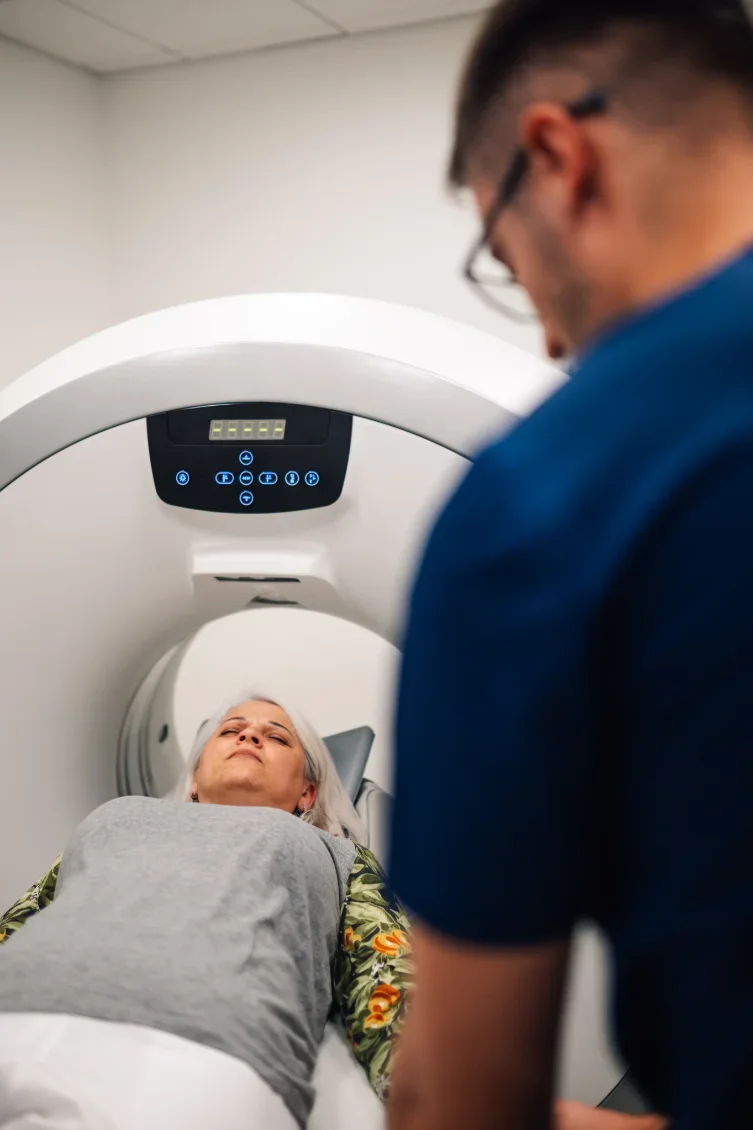
The treatment course is short and includes six sessions over two to three weeks, with two or three sessions each week. The dose is low, with no recovery time needed and nothing to stop you from carrying on as normal.
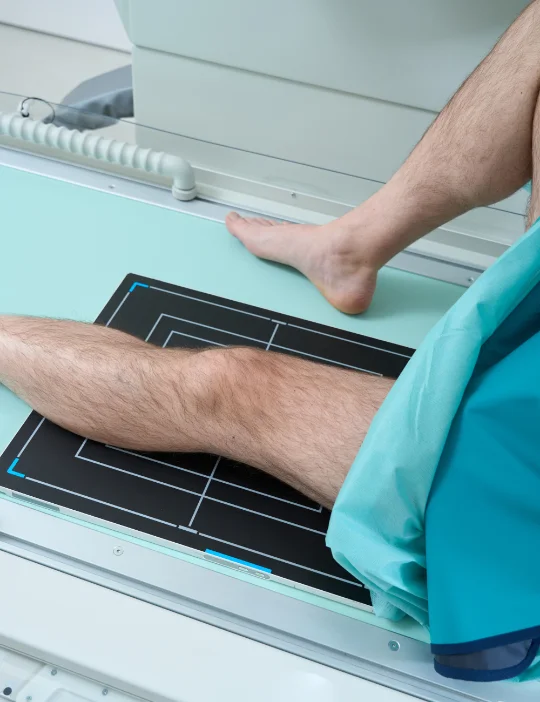
Each session is just like having a scan. You lie down with the affected area positioned carefully under the machine. Invisible and painless X-rays come out of the end of the machine. It takes just a few minutes each day and you won’t feel any burning or pain, and you won’t feel drowsy or dizzy afterwards. When the treatment finishes you just get up and get on with your day.
The Course
Two or three a week, over about three weeks.
Then Wait
Just carry on as normal. The pain tends to gradually get better over this time.
Review
Your doctor will assess your response. Some people find the pain has gone by this point, but often a second course is needed for the full treatment effect.
From Symptoms to Treatment
The best treatment option depends on how long the pain has been there and how it’s responded to other treatments. If you’ve been told that surgery is the only choice, it is worth coming for a discussion with us first.

If It Is Recent
If you’ve only had the tendon pain for a few weeks or months then you should try exercises first. Often the pain will settle by adjusting your activities and gradually building up exercise with a physiotherapist.
If It Has Not Settled
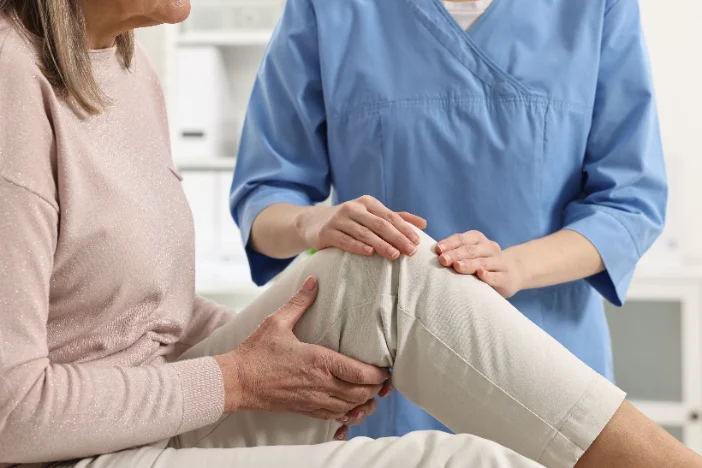
For many patients in this position, radiotherapy offers a way to reduce pain without needing painful and invasive treatments, working directly on the inflammation and tissue changes that keep the tendon from improving. You could also consider other options like injections or shockwave treatment.
If the Tendon Is Damaged
If you have a partial tear on the scan then radiotherapy can still be an effective option. But if you have a full thickness tear then radiotherapy will not repair it and you will need a surgical opinion. We will tell you if we think that’s what you need to do.
Care That Stands Apart
Theralife Clinics is a consultant-led clinic specialising in low-dose radiotherapy for benign conditions. The same consultant looks after you from your first assessment through to follow-up. We see patients from Alderley Edge, Wilmslow, Handforth, Prestbury, Macclesfield, Bramhall, Knutsford, Poynton, Cheadle Hulme, Altrincham, Stockport and Manchester city centre, and from further afield across the North West.

Common Questions
